
Wooden-sole sandals and sculpted wedges
Two styles in production now, both built on wood rather than a moulded wedge — a multi-strap gladiator platform and a layered wood-grain mule heel.
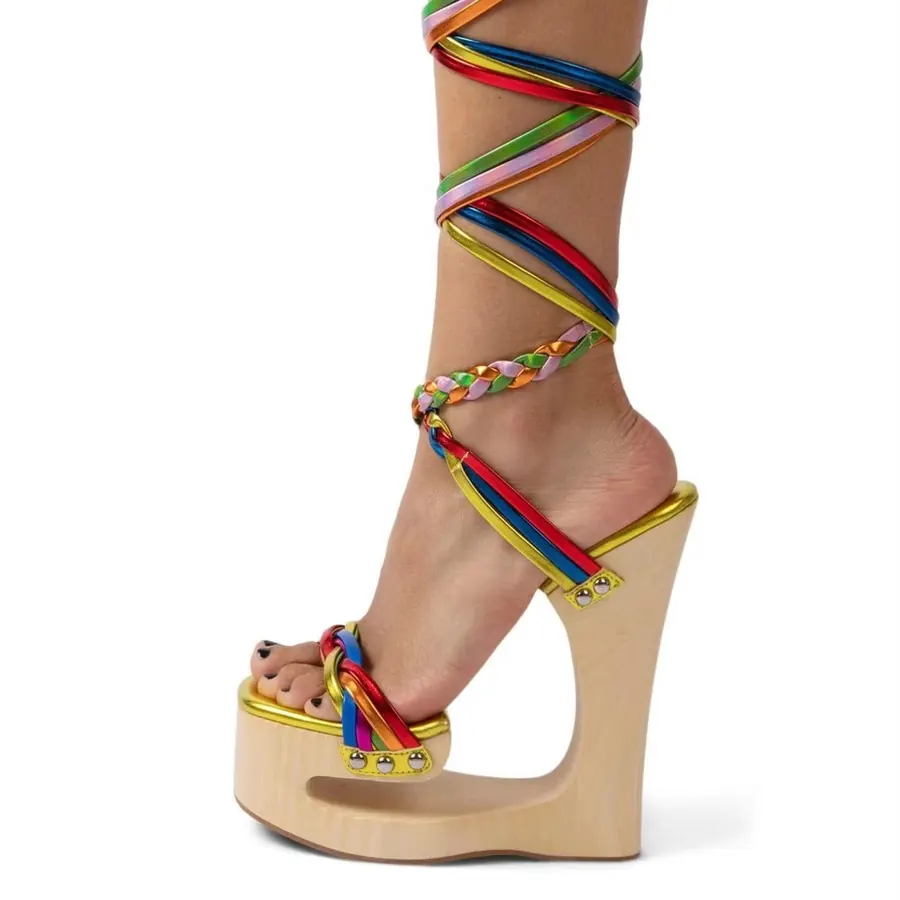
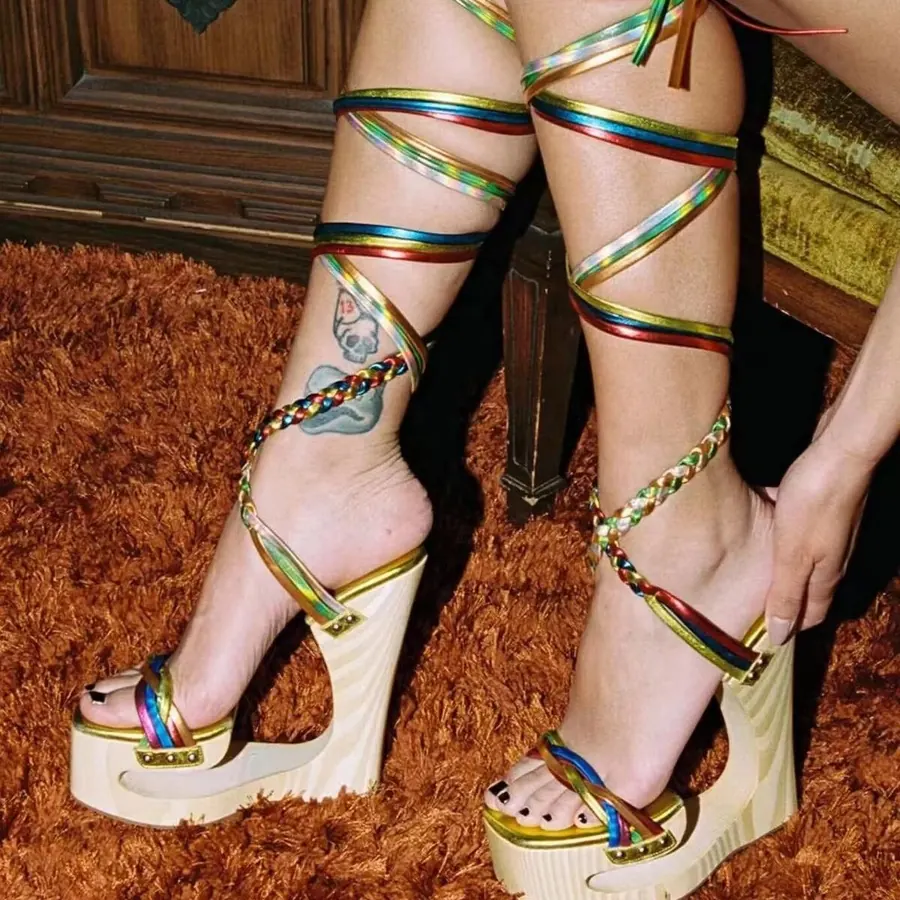
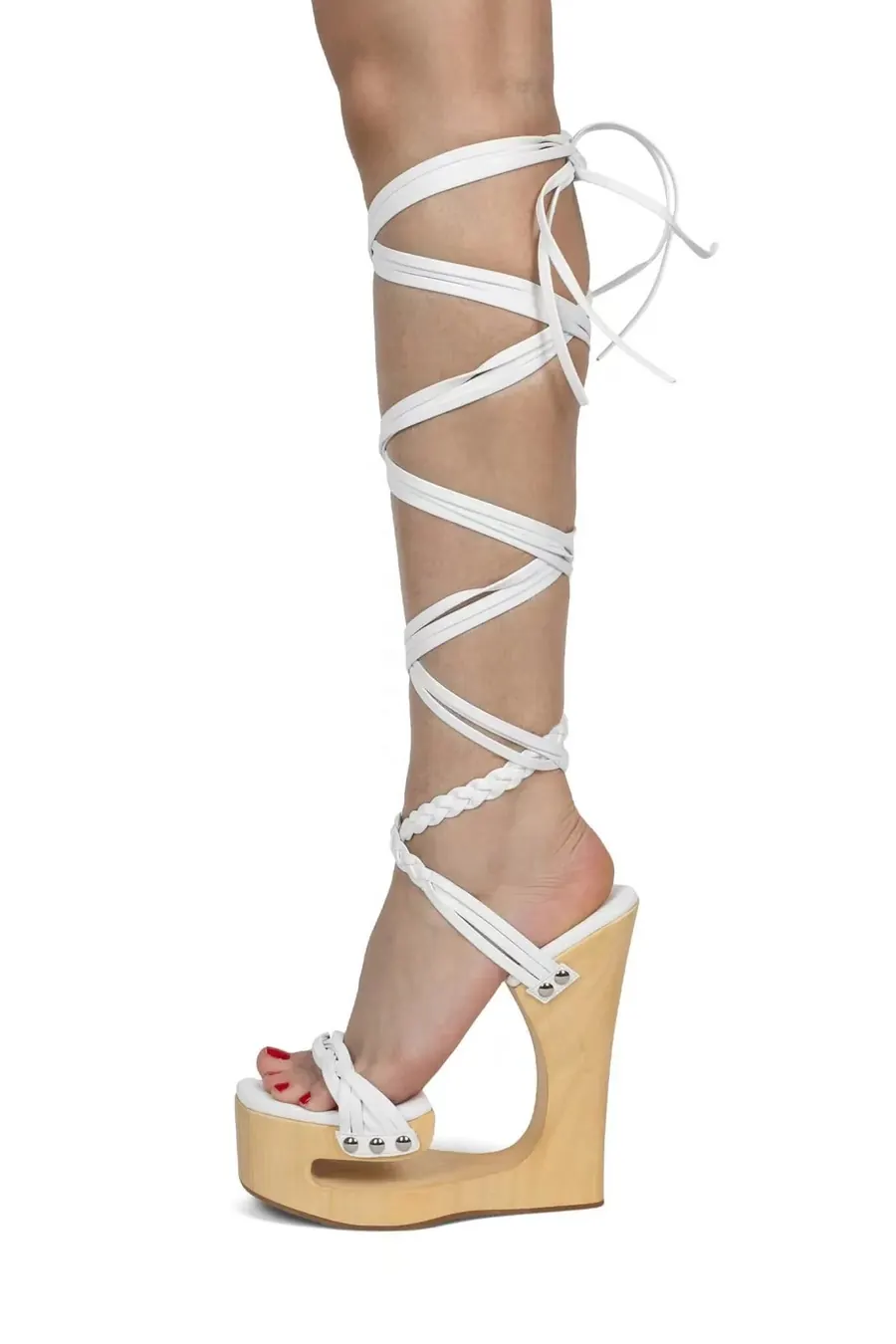
Multi-strap gladiator wedge on a sculpted wooden sole
A wrap-around multi-strap gladiator built on a sculpted wooden wedge, with a cut-out under the arch that keeps the profile crisp instead of blocky. PU upper and lining, rubber outsole, round toe and a lace-up closure that adjusts across the instep rather than only at the ankle.
The wood is the structural element, not a veneer over a plastic wedge — which is why the heel shape can be cut as an arc rather than moulded as a solid block.
| Style number | 1645 |
|---|---|
| Upper | PU |
| Lining | PU |
| Midsole | Wood — sculpted wedge with cut-out under the arch |
| Outsole | Rubber |
| Heel | Wedge, ultra high (5"+) |
| Toe | Round |
| Sizes | EUR 36–43 |
| Colour | Multi, as shown |
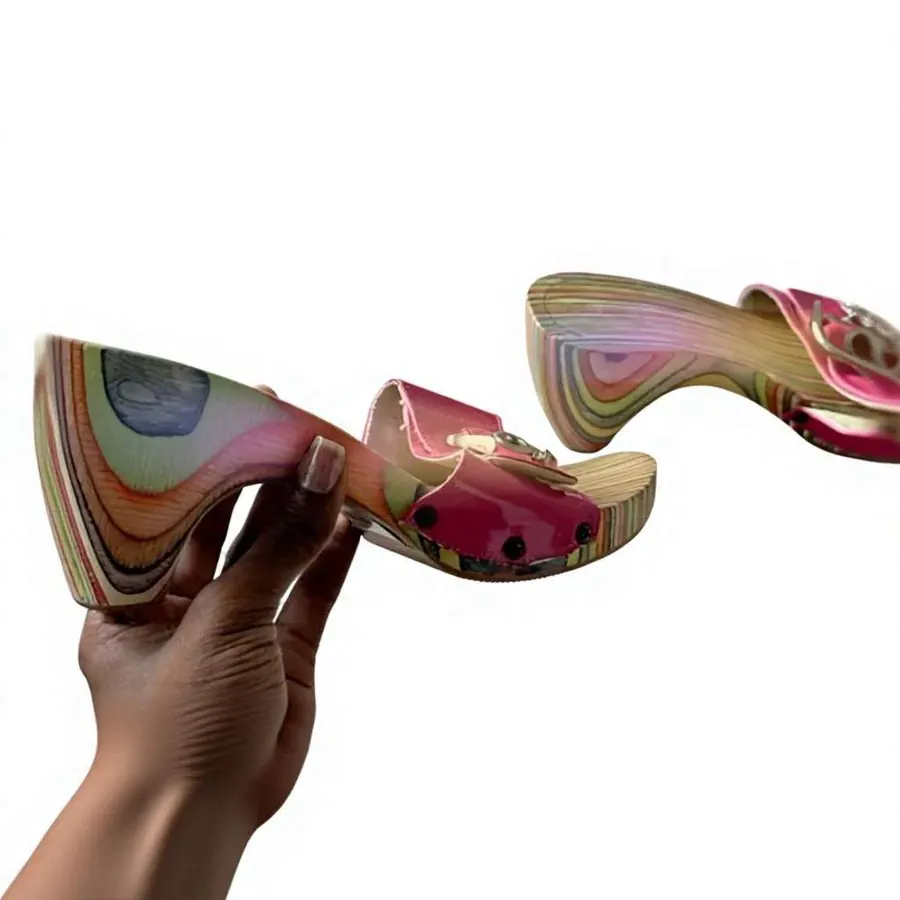
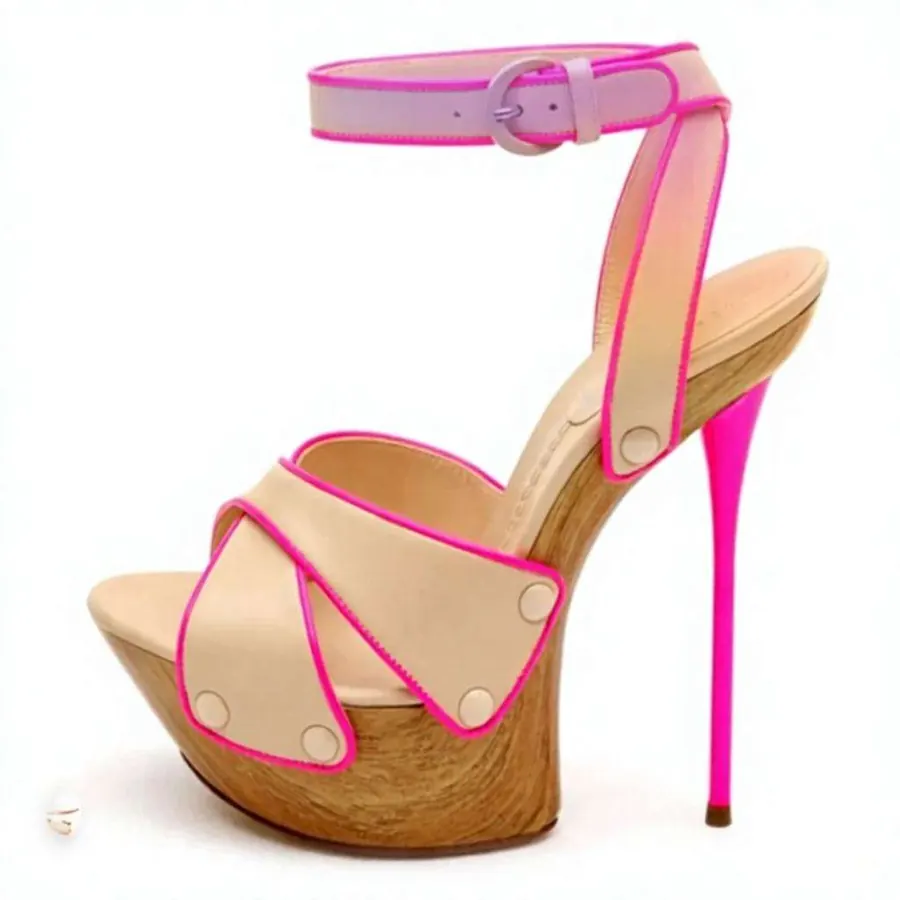
Pink patent mule on a layered wood-grain sculpted wedge
A slip-on mule in pink patent, carried on a wedge that shows its wood grain as the pattern rather than hiding it under a solid finish. The layered grain is the feature of the style: it reads as colour from a distance and as wood up close.
Low-vamp, open-back construction with a single wide strap across the foot — quick to wear, and a natural fit for the Y2K and retro-modern ranges currently selling in the US and EU.
| Style | Y2K wedge mule |
|---|---|
| Upper | Patent PU |
| Midsole | Rubber and wood |
| Outsole | PVC and wood |
| Heel | Sculpted wedge, layered wood-grain finish |
| Sizes | 5–11 — tell us the grading your market needs |
| Colour | Pink, as shown |
Why wooden soles are back in the range
Wood gives a wedge a shape that moulded EVA or PU cannot hold — sharper arcs, thinner platforms and a visible grain that reads as craft rather than as foam. The trade-off is weight and consistency: wood varies piece to piece, so grain, colour and any knotting have to be accepted as part of the material rather than treated as a defect. If you need a perfectly uniform heel, a wood-effect finish on a moulded wedge is the honest alternative, and we will tell you which one your design actually needs.
Developing your own wooden-sole style
These two are the wooden-sole styles currently in production. If neither is the shape you need, we develop new ones from a reference shoe or a sketch: the last is modelled to your dimensions, the wedge profile is set from your drawing, and a physical sample is built before anything goes to bulk. For a synthetic upper the sample is USD 100 and takes about 15 days; wood profiles and custom hardware are quoted per style.
Questions buyers ask about this
Can we order these exactly as shown?
Yes. Both styles can be ordered as they appear, or adapted — last, materials, colour, hardware and branding. Private-label runs on this site start at 50 pairs per style. If you want a single pair to evaluate before committing, ask and we will tell you what is possible.
Can we change the wood or the heel profile?
Tell us the wood finish, colour and heel shape you need and we will confirm what is achievable on the sample. Wood varies piece to piece in grain and tone, and that variation is part of the material — if you need perfect uniformity, a wood-effect finish on a moulded wedge is the alternative and we will say so.
Are there other wooden-sole styles?
These two are the wooden-sole styles currently in production. New wooden-sole designs are developed from a reference shoe or a sketch, with the last and wedge profile modelled to your dimensions before sampling.
Send the shoe you have in mind
A photo, a sketch or a tech pack is enough. You get construction options, indicative pricing and the MOQ back within 24 hours. Sampling a synthetic leather (PU) upper is USD 100 and takes around 15 days — and nothing goes into bulk until you have approved the shoe.